Summaries of the content in this section.
The six days of Creation
 For many, the biblical creation account is a stumbling block. Cosmologists dismiss it as myth because it bears no resemblance to their own story. Creationists accept it but struggle to relate it to what is known about the world. Others look for the middle road, claiming that the order of events comes close enough to what science says, or that the account is about the ‘why’ rather than the ‘how’. The problem with ‘guided evolution’ attempts at reconciliation is that the biblical account and scientific knowledge both require that creation took place in the beginning, not continuously through time. Evolution is not creation; it is a capacity to adapt and diversify that the Creator built into his creation. This article takes a fresh look at what the text says and suggests that taking it at face value does not require rejecting what we know about the past from astronomy and geology.
The antediluvian world
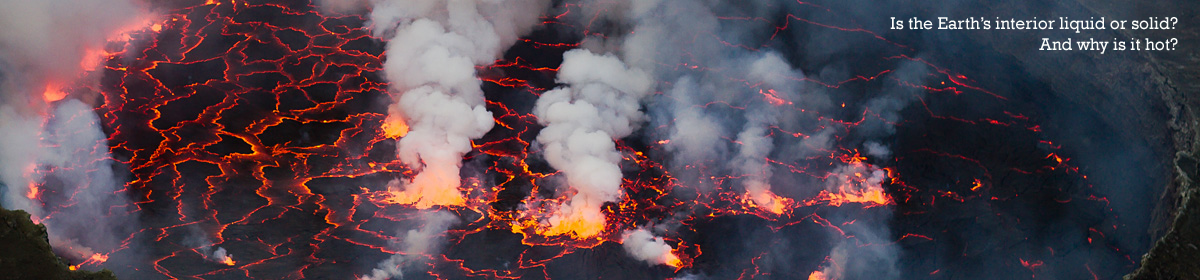
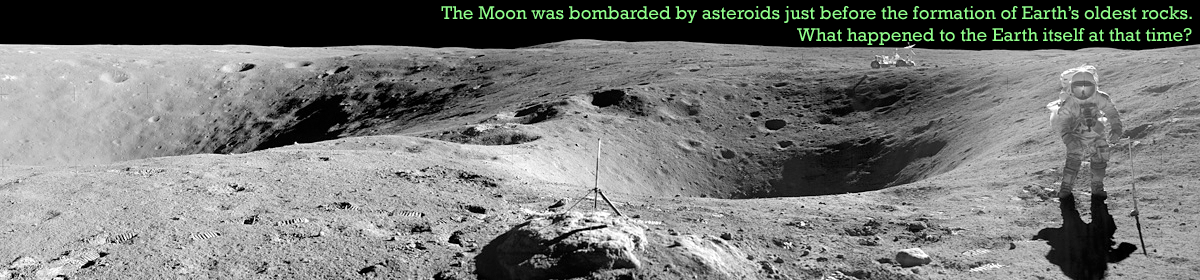
The world that existed before the flood-cataclysm – placed in geological time immediately before the Archaean – no longer exists, so we have no direct evidence of what it was like. Although many ancient traditions refer to it, the book of Genesis, our main source of information, describes a world significantly different from the one we know today. There were no surface oceans. The water supplying its rivers and lakes came from a subterranean body of water called the ‘deep’. Recent research shows that, locked up in minerals, a substantial remnant of that ocean still exists, as much as what now lies at the surface. The land, likewise, had a different geography (though certain place names were carried over to the new world) and the interior of the planet was hot only by reason of its pressure. Over time its temperature rose, leading to eruptions of magma and deposits of metals such as gold, iron and copper. The same processes that resurfaced the Earth also resurfaced the Moon and the other terrestrial planets.
Antediluvian fauna and flora
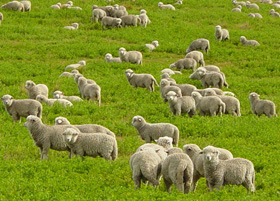 Plants and animals existed on Earth from the beginning. After the cataclysm, however, plants and animals had to start again; they had to adapt to a world that was initially barren, unstable, and ever changing. We can trace the latter part of their history, where we find them multiplying in number of species and becoming more specialised until they attain the forms seen today. Animals such as the sheep and raven, plants such as the vine and olive, evolved from forms that were nothing like their ultimate descendants. So: is the mention of such species in the antediluvian world anachronistic?